


The Silent Crisis: Unmet Needs and Challenges in Kidney Care

of Chronic Kidney Disease (CKD) cases are driven by Type 2 Diabetes.
For patients with Type 2 Diabetes, early detection of renal complications is paramount. Timely identification enables proactive interventions to slow disease progression and preserve kidney health. This is crucial for preventing severe cascading outcomes, including cardiovascular complications, kidney failure, dialysis, or the need for a kidney transplant.

of kidney function is irreversibly lost before patients experience any noticeable symptoms.
The early stages of Chronic Kidney Disease (CKD) are notoriously asymptomatic, leaving many completely unaware of their declining health. Symptoms typically manifest only after 80-90% of renal function is destroyed. The dangerous synergy between Type 2 Diabetes and CKD frequently leads to severe heart failure and end-stage kidney disease (ESKD), leaving patients reliant on life-sustaining dialysis or organ transplantation.
Your Potential Needs for Kidney Testing
Overcoming the "Lag Time" of Traditional Biomarkers
Current standard markers, UACR and eGFR, typically show abnormalities only after substantial structural damage or functional loss has already occurred, failing to meet the critical need for early clinical intervention.

Uncovering "Hidden Risks" Behind Normal Clinical Values
Clinically, a significant subset of patients presents without proteinuria (normal UACR) and with preserved kidney function metrics, yet their actual renal function continues to silently deteriorate.
Predicting Future "Progression Trajectories"
Values from traditional clinical tests merely capture a "snapshot" of the current state. They fail to effectively differentiate between patients with stable disease and "rapid progressors" who are on the verge of steep functional decline.
Empowering Personalized "Health Management Strategies"
Amidst the complexities of modern, high-stress lifestyles and dietary habits, individuals require objective metrics to validate whether lifestyle modifications or protective therapies are truly effective.
DNlite Today. Kidney Health Tomorrow.
Through a simple and safe urine test, DNlite provides a predictive assessment of your risk for kidney disease progression. More than just a lab report, it serves as a vital foundation for shared decision-making—empowering you and your physician to collaboratively design early care strategies and effectively delay disease progression.

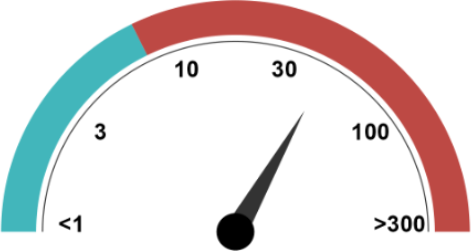
DNlite Test Result
→ Low Risk

Your kidney function is currently stable. Please continue your current routine of blood glucose monitoring, medication management, and complication screening. We recommend scheduling an annual DNlite test to proactively monitor and assess your risk of kidney disease progression.
DNlite Product Specifications
For detailed characteristics of DNlite, see our Product Specifications here.
Take Control of Your Kidney Health in 4 Simple Steps
By understanding your risk early, you can partner with your physician to take proactive measures and delay disease progression. This is exactly what DNlite is designed to do.
Consult: Discuss with your doctor to determine if the DNlite test is right for you.
Test: Visit an authorized DNlite testing location for a simple and convenient urine test.
Review: You and your doctor will receive a detailed report predicting your risk of kidney disease progression.
Act: Based on your "DNlite Risk Assessment Report," collaborate with your doctor to develop a personalized action plan for your next steps.