Foreseeing Risk: DNlite Opens the Golden Window for Intervention
The progression from healthy kidney function to clinical damage is a continuous process. DNlite detects subtle, early-stage changes, identifying critical signals before irreversible structural damage occurs. This bridges the critical gap in early screening, securing a vital "Golden Window of Intervention" for both physicians and patients. By enabling proactive intervention to delay disease progression, we move beyond passively waiting for traditional markers to sound the alarm.
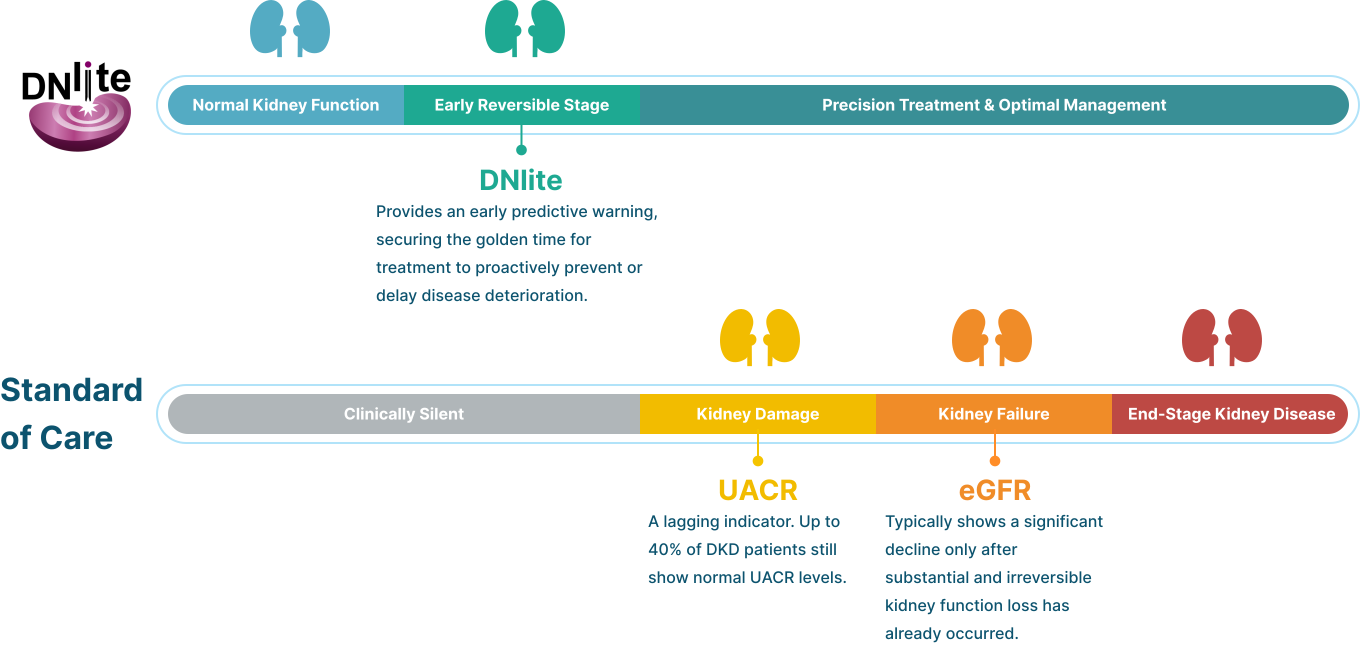
DNlite Capturing the Specific Signal of Early Renal Functional Decline
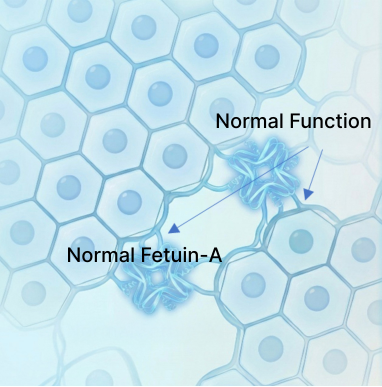
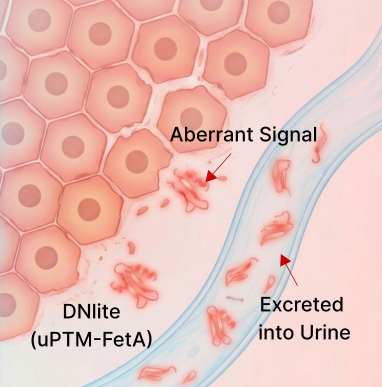
While traditional markers measure accumulated renal damage (how much the kidney is damaged), DNlite detects active, ongoing kidney injury. Under normal physiological conditions, Fetuin-A is integral to a healthy renal microenvironment. However, upon exposure to injury stimuli, the intracellular post-translational modification (PTM) mechanisms within kidney tissue are altered. This disruption leads to the generation of an aberrant form PTM Fetuin-A (DNlite), which is subsequently shed into the urine. The presence of this specific biomarker indicates the disruption of normal cellular mechanisms. By identifying this critical signal, DNlite serves as an early warning system, detecting renal distress well before irreversible structural damage manifests.
Normal Renal
Microenvironment
Normal Fetuin-A (Normal PTM)
Initial Functional
abnormality
Abnormal Fetuin-A (Aberrant PTM)
A Diagnostic Solution Tailored for Clinical Needs

Proprietary Patented
Targets specific post-translationally modified (PTM) proteins in the urine, detecting microscopic pathological signals that traditional markers completely miss.

Non-Invasive Testing
Requires only a minimal urine sample. It is radiation-free, painless, and seamlessly integrates into routine clinical workflows.

Early Risk Prediction
Delivers an early warning before substantial renal function deterioration occurs, securing a critical window for early clinical intervention.

Precision Management
Empowers physicians to accurately stratify high-risk and low-risk patient populations, optimizing healthcare resource allocation and targeted treatment strategies.

From Clinical Validation to Guideline Consensus:
The New Standard Highly Recognized by the Medical Community
Superior Risk Stratification Capability
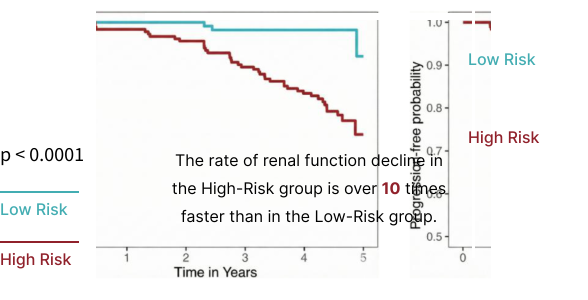
Clinical follow-up data demonstrates DNlite's ability to significantly stratify the high-risk population for renal function decline (red line). The stark contrast in progression rates and incidence compared to the low-risk cohort robustly validates its reliability as an early predictive biomarker.
Addressing Unmet Needs in Standard of Care
Over 50% of normoalbuminuric patients harbor a high risk for renal function decline

A significant proportion of diabetic patients with normal UACR levels still face a high risk of kidney function deterioration. DNlite precisely identifies these "hidden" high-risk patients who are consistently missed by traditional testing, enabling true early defense and proactive intervention.
References:GT Chuang, et al. Am J Nephrol. 2024; 55 (1): 106–114. doi:10.1159/000534514

Recommended by Authoritative Clinical Guidelines
DNlite has been officially incorporated into the 2024 Taiwan Clinical Practice Guideline for Diabetic Kidney Disease as a designated risk assessment tool and personalized medicine biomarker for renal function decline in patients with early-stage (G1-G3) Type 2 Diabetes. This major milestone signifies the dual endorsement of DNlite's clinical utility by leading experts in both nephrology and endocrinology.

Clinician Testimonials

Dr. Chien-Ning Huang
President, Chung Shan Medical University
Professor & Attending Physician, Division of Endocrinology and Metabolism, Chung Shan Medical University Hospital
Once kidney damage becomes structural, it is often irreversible. Current proteinuria tests have a 'diagnostic blind spot,' but DNlite detects early renal lesions 1 to 2 years earlier. Seizing this critical window for early intervention gives patients a real chance to reverse renal decline.


Dr. Chin-Chi Kuo
Vice Superintendent, Big Data Center, China Medical University Hospital Professor & Attending Physician, Division of Nephrology
By integrating big data with precision biomarkers like DNlite, we can overcome traditional diagnostic blind spots to identify 'invisible' high-risk patients—those experiencing rapid renal decline despite normal proteinuria. This is more than a test result; it is a critical opportunity to alter the disease trajectory and safeguard kidney health before irreversible damage occurs.

Dr. Hung-Lin Chen
President, Taiwan Association of Clinical Diabetes Superintendent, Chen Hung-Lin ClinicClinical data reveals that the risk of nephropathy begins to rise even during prediabetes. Traditional tests often flag abnormalities too late, causing us to miss the crucial window for reversal. Novel diagnostics like DNlite allow us to identify high-risk populations while conventional markers still appear normal. For primary care, this early detection is a game-changer—it grants us the opportunity to implement lifestyle interventions and preserve kidney function.
Global Reach & Regulatory Approvals

Global Breakthrough
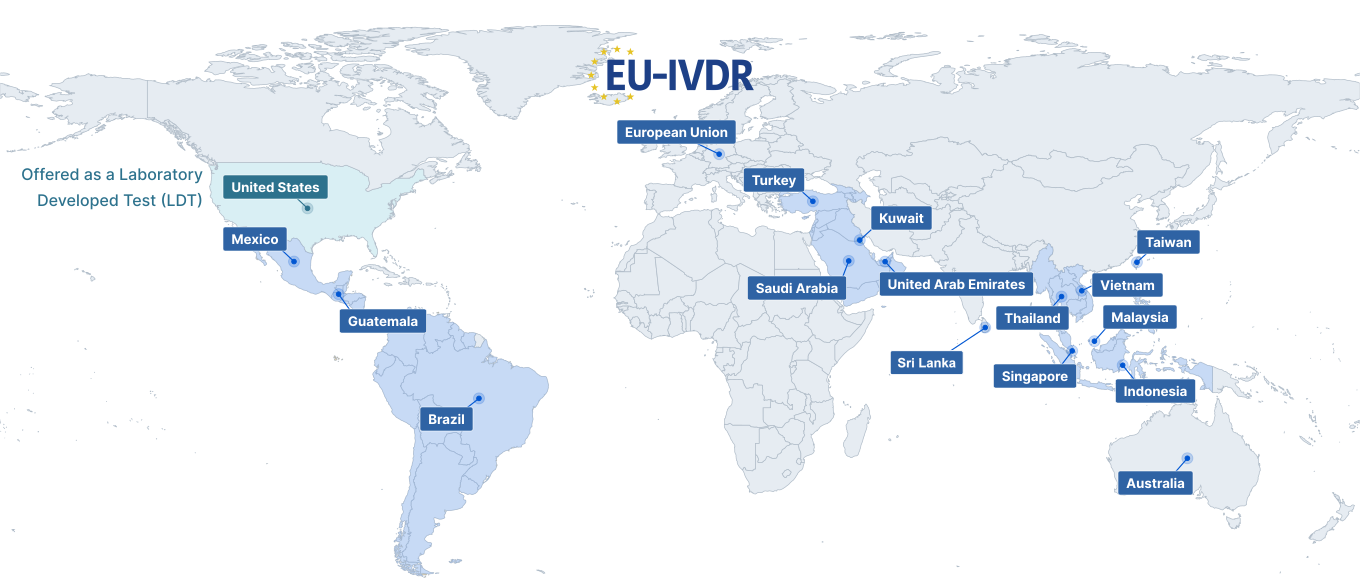
The industry's first kidney disease prognostic product to obtain EU IVDR certification, setting the highest regulatory standard.

Global Network
Secured market authorization in over 42 countries, with a global network that fully covers the European Union.

Strategic Expansion
Successfully penetrated high-risk regions for Diabetic Kidney Disease (DKD), including major countries across Southeast Asia, the Middle East, and Latin America.
Global Patents
80
+
Market Authorizations
42
+
Countries